《韋恩每日靈修:申命記31章1-13節 摩西應許上帝的同在 》(2026/05/13 禮拜三-白天)
1.金句反芻:
你們當剛強壯膽,不要害怕,也不要畏懼他們,因為耶和華-你的上帝必與你同去;他必不撇下你,也不丟棄你。
Be strong and courageous. Do not be afraid or terrified because of them, for the Lord your God goes with you; he will never leave you nor forsake you.”
(申命記 Deuteronomy 31:6)
2.註釋(中華基督教衛理公會三讀三禱團隊整理,★早禱影音):
(1)今天經文可以說是摩西的臨別之言,他再三交代(申命)其身後要注意的事。
(2)首先是摩西不能陪他們過到約旦河的彼岸了,約書亞將會接續領導的工作,所以他勉勵約書亞要「剛強壯膽」。
(3)雖然任務艱鉅,但是上主與他們同在,使他們不致懼怕。
(4)再者,提醒他們要守每七年最後一年的「豁免年」,這是非常重要的事。
(5)「豁免」人的債務,以免貧窮世襲,或是因為一次的意外,導致世代成為奴隸。
(6)也要「豁免」土地的耕作,讓土地可以暫時休耕得以恢復,避免過度的發展,造成生態的疲乏(參申命記第十五章)。
(7)這是維繫一個公義社會的重要指示,使人與群體、與自然能夠和諧,可惜這些律法的要求往往被忽略了。
(8)最後也是最重要的事,就是要世代「敬畏」耶和華(上主)。
(9)敬畏祂,就會遵行其誡命,自然會體恤人,特別是弱勢的人,並促成與環境和諧。
(10)這樣所進入的應許之地,才能成為真正的「流奶與蜜」之地。
(11)請問對於「豁免年」的精神,你有何現代版的實踐方式呢?
(12)你如何透過崇拜與靈性的生活,而保持對上主的敬畏呢?
3.默想與回應(張勝為牧師撰寫):
(1)豁免年的現代實踐,讓我想到前幾年有機會到新竹的山區泰雅爾族的農地參觀。當地有些農民已經開始在採用「自然農法」(並非完全無農藥的「有機栽培」,而是減少使用農藥、手動除蟲、保留農地周圍部分自然林況……等等多管齊下)和「休耕」(讓土地休息恢復肥沃、不使用化肥),不再強力壓榨土地、以最大產量/最漂亮的農作物外型為目標。但是這樣做比起原來的做法(大量農藥、化肥、完全去除農地周邊自然林況、不休耕)卻要承受新台幣的損失,需要很強的毅力與信仰才能長期維持。
與之相反的,幾年前也我曾到西馬來西亞北部的原住民部落,看到當地為了經濟已經全部砍伐了原始林,並施用用大量農藥與除草劑種植棕櫚樹(當地華語稱為「棕油樹」);當我摸到棕櫚田間那寸草不生、也幾乎看不到任何生物的黃土時,心情相當震撼;或許經濟真的是不容易克服的因素。
(2)與自然和諧尚且可以靠技術解決(而且大自然有一定的自我修復能力),與人和諧我覺得更加困難。如何豁免人的債務?如何讓窮人也能翻身?如何幫助現代的奴工(廣大的「社畜」與底層工作者們……)?這似乎都需要系統性的解決(今天讀到的這些律法顯然不是針對個人心靈的提醒而已,而是需要整個社群共同營造並遵守)。我目前並沒有想到甚麼解決的好方法。
(3)回到經文的一開始:「當剛強壯膽,不要害怕」。聽起來是要我們敬畏神(與之頒布的誡命),不要害怕人。我們是怕神還是怕人?
作者: tiunnsengui
要謹守遵行 Be Careful to Do
《韋恩每日靈修:申命記5章22-33節 摩西傳達上帝的誡命》(2026/05/12 禮拜二-白天)
1.金句反芻:
所以,你們要照耶和華-你們上帝所吩咐的謹守遵行,不可偏離左右。你們要走耶和華-你們的上帝所吩咐的一切道路,使你們可以存活得福,並使你們的日子在所要承受的地上得以長久。
So be careful to do what the Lord your God has commanded you; do not turn aside to the right or to the left. Walk in obedience to all that the Lord your God has commanded you, so that you may live and prosper and prolong your days in the land that you will possess.
(申命記 Deuteronomy 5:32-33)
2.註釋(中華基督教衛理公會三讀三禱團隊整理,★早禱影音):
(1)本週前半接續著主日的經課,我們認識到上主是創造萬物的主,在一切萬有之上。
(2)另一方面祂也關心著人類的歷史,祂透過立約與人類建立關係,引向祂的救贖。
(3)今天經文是祂向以色列人頒佈誡命,外在炫目的風、雲、火、電背後,造物的主向祂所創造的人,顯示了祂對人的心意。
(4)這些應遵守的誡命就是人之所以為人應有的品質。
(5)這是上主為人性提供的方向,也指示了人生的道路,讓我們可以遵行在其道路上,可以存活得福,領悟生之意義。
(6)不但如此,也使我們的日子可以承受祂所賜的福份。
(7)請問你如何從上主對人的要求中找到生活的意義呢?
(8)經文中的「敬畏」與「遵守」之間有何關係?
3.默想與回應(張勝為牧師撰寫):
(1)「存活得福」、「得以長久」……其實不要說得到甚麼福氣或活多久了,我覺得人光是能「存活」就不是一件簡單的事情。
(2)每天在活,也有生命嚮往的方向、法則與關係。我很喜歡今天這段註釋:「這些應遵守的誡命就是人之所以為人應有的品質」。但誡命並不是人想像出來,而是神啟示的;也就是從聖經的信仰而言,人無法完全知道自己該怎麼活/該如何成為一個完整的人,而必須要從神啟示的誡命與法則中去琢磨。
(3)關於「敬畏」與「遵守」,或許敬畏是一個漸漸認識神的心態調整,而遵守是每天與神互動的生命練習;在知道與做到之間,就是一生的信仰冒險。
讀書筆記:王崇堯院長,《神學導論》(4)-耶穌基督福音
📒讀書筆記:王崇堯院長,《神學導論》(張勝為撰寫,15之4:耶穌基督福音,2026/05/12)
1. 摘錄:
(1)西方社會思想家Max Horkheimer雖然是位無神論者,他卻把宗教視為「應該去鼓勵支持人類對正義奮鬥的渴求。」Horkheimer說人類對正義的渴求是基於“彌賽亞的夢想”(dream of the Messiah),由此歷史中的不公道、恐怖事故決不能被允許成為受害者的終極命運。 而所謂「完美主義」的理想,對Horkheimer來說,只有在宗教裡面才能保有及表達出來。
……這樣說來,馬克思對宗教的批判是在於它已成為統治階級為了維持其既得利益的意識型態,也由此助長了不公義的社會情境。宗教在一個階級社會裡成為人類追求自由的障礙,因為宗教鼓勵被壓迫者去服從既有權威體制,面對現世不公義所造成的苦難不是去鬥爭克服它,而是甘願適應它。而基督教會作為宗教信仰的有形機構,它顯然成了人們心理及社會的異化作用,不是鼓舞人們去掌握歷史且改變不公義情境。
體驗基督福音對世人憐憫之前,解構宗教(或台灣教會)在台灣社會的作用是相當重要的前題。徹底認清宗教在台灣社會相當程度已淪為統治階級的意識型態後,我們才能從中反省並解構。這樣重新認識宗教作為「鼓勵支持台灣人們對正義奮鬥的渴求」時,福音的理解與落實實踐才有可能。
(2)耶穌上帝國解放的福音可溯源於原始以色列人(proto-Israelite)的「出埃及事件」。在摩西的引領下,凡認同耶和華宗教信仰藉著十誡所揭示的一個平等社會理想,皆可加入反抗壓迫者法老的出埃及運動。這個運動從出埃及,曠野到迦南建立「以色列國家」的認同(nation identity),融合了不同被壓迫的族群如希伯來人、米甸人、亞蘭人、阿皮魯人(Apiru)及迦南原住民等。
……問題是以色列國家認同是如何形成?其實在「西乃之約」的中心十誡,我們看到二個部份:一是第一誡到第四誡的「耶和華信仰」的認同;另一是第五誡到第十誡的「平等社會理想」的認同。這些被壓迫的族群們,就是因為有「社會平等契約」(五誡到十誡)的保證,才願意共同形成一個以色列國家的認同,然後藉著先知們的奮鬥,這些族群們漸漸體會「社會平等契約」是建基於希伯來人的「耶和華宗教信念」(一誡到四誡),由此衍生一個以耶和華信仰為中心的平等主義團體(Yahwistic Egalitarian Community),到最後的以色列國家認同。
這樣看來,以色列從國家認同到信仰認同有其軌跡可循,那就是先有「社會平等契約」才有「新國家認同」的可能,也就是因著社會平等契約的保證,經歷過被壓迫的各族群才願意融合成為一個新國家。然後經由先知們的努力宣揚,使以色列新國家的人民認知到「社會平等契約」(五誡到十誡)的根源是立基於「耶和華宗教信念」(一誡到十誡),進而信仰耶和華上帝為拯救他/她們出埃及及建立國家的精神動力及歷史信仰意識。
台灣教會在台灣的宣教信念是「福音救台灣」及推展「社會及個人心靈重建」運動,以色列新國家的形成對建構台灣解放神學應該有所啟示。我們有「族群問題」,有「國家認同」問題,除非台灣教會致力於族群間「社會平等契約」的建造,才有可能衍生「台灣」新國家的認同,像所有出埃及的各族群及迦南原住民一樣,願意成為一個新國家,被人稱為「以色列人」或「台灣人」。
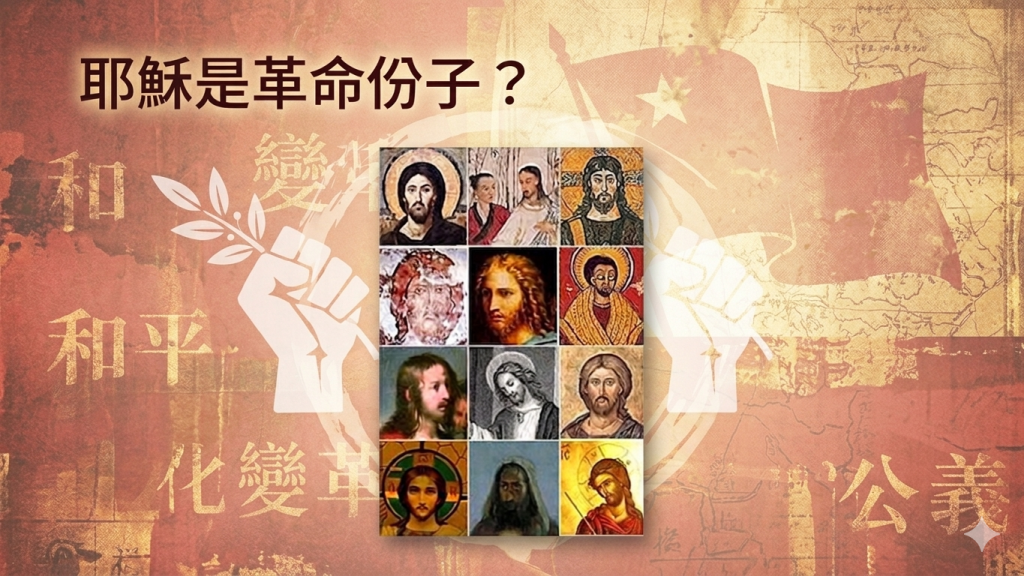
(3)那麼,耶穌的態度又是如何呢?Yoder認為耶穌的生涯及祂所宣稱上帝國的福音,並不是教導人逃避政治性的抉擇;反而是教導人如何採取社會、政治與倫理方面的立場。Yoder進一步說,這個立場是絕對的和平主義者,耶穌一點也不希望以舊制度下所厭惡的武力,來達成新社會的目的。
……Yoder認為在耶穌的生涯中,至少有三次機會可使其使用武力來達成上帝國的統治,第一次是在加利利地區使五千人吃飽的時候,這麼多人聚集,且從耶穌身上得到滿足的印證,絕對是革命的大好時機,然耶穌卻沒有這樣做。第二次是進入耶路撒冷潔淨聖殿的時候,耶穌的義舉震憾跟隨祂的人群,只要耶穌令聲一響,革命似乎可達成的。而第三次的機會是在客西馬尼園,彼得的刀已經出鞘,剩下的就是耶穌的默許,然耶穌也沒有採取武力的立場。 對耶穌來說,上帝國的革命已在進行,已經以十二個門徒為中心的一個社會實體組織在進行,這也是新制度及新生活對舊制度及舊生活方式解放的挑戰,而唯一身歷其境的人才能了解這種革命性的福音見解。
(4)人類自我慾望中,隱含著肯定自我,否定別人傾向。自私以一種微妙的形式存在人類社會,它不只是追求自我的物質利益,也依附於社會認可而存在。自我慾望在古典及現今世俗中不是被貶降為邪惡,以各種禁慾主義試圖摧毀,就是被昇華為一種自然本能,以弗洛依德方式為之解脫。福音之價值不但不為自我慾望開脫,也不贊同以禁慾方式加予摧毀,而是形成一種福音與自我慾望間的一種「張力」,對利己自我中心最基本的本質驕傲提出批判。 耶穌在批判法利賽人的自我中心時,就說他們喜歡被尊稱為老師,喜歡坐在宴席上的首位。這些自高的人終究會被上帝拉下,想做大人物,就要做人的僕役。
……福音之愛不只批判人性中的自私及利己主義,也提供一個新的價值體系愛的理想。耶穌說人的施捨不可炫耀於大庭廣眾,人的宗教虔誠也不是為了得到社會贊同。最重要的是,福音之愛幫助的對象是窮人、弱者,因為他/她們無法也無力回報。這樣的福音之愛不只立基於上帝之愛與自我慾望之間的「張力」,更建基於自我與上帝生命關係的一種「活力」,一種新的價值體系,它不考慮世俗倫理中所強調的「行為結果」或「行為本身」,而是在意對上帝意志的絕對順從,及活在上帝之愛中所能衍生之愛的活力。
……耶穌福音之愛是一種革命,在自我十字架上的犧牲奉獻中實踐更高的自我實現,這就是終極的面向,或信仰的面向。這也就是聖經中啟示一一道成肉身一一永恆在俗世中展現。它超越自然主義的歷史平面,在橫向人間的利己主義提供綜向愛的理想,它也不是將永恆永恆化與現實無關的理想主義。永恆在俗世中展現,帶來了批判鬥爭的「張力」,及實踐信仰的「活力」。
如果我們將道成肉身永恆在俗世展現,看成神話丟掉的話,我們就將信仰最有價值的縱向層面丟掉,最後我們只有跟著橫向的人間倫理走。縱向思想沒有,基督教倫理變的膚淺,遷就於社會政治成就的相對性;以現代文明來理解的話,基督教信仰成為一種人文主義,上帝若被丟到人間倫理的外面,人間剩下的當然就是只有驕傲誇口的人類自我了。
(5)總結來說,耶穌的福音是解放的福音,上帝國已經臨在地上(還沒完全),進行著一場結構性及人類本質的改造革新運動,使人類恢復上主形像與活在樂園的集體幸福情境。它是以非暴力的方式來達成,以一個新的門徒互助社會組織為發端來對抗那隱涵暴力壓迫本質的舊式制度。所以說,耶穌的福音是革命性、解放的福音。
2.心得:
(1)本篇篇名為「耶穌基督福音」,但也多次提到了有關基督信仰認同與國/族認同的問題。這不免讓人的防衛心加強,認為「又來了」、「長老教會就是很政治」……等等的想法。但本文其實仔細爬梳了耶穌時代的政治與信仰背景,包括法利賽人、撒督該人、愛色尼群體、馬加比王朝、希律王家族等等。
想一想,確實主耶穌後來所宣揚的福音都跟這些背景相關,或者更簡單地說,福音並不是在政治/族群認同真空的環境下所產生的。其實「我到底是誰?」與「我到底屬於哪裡?」應該是每個人都會問的。就算是多重混血、空中飛人、多語溝通……等等的人,也都需要一個身分認同的「家」(有句話說:「心安之處即是家」)。
儘管如此,我對於本文把整體台灣視為「新以色列」,要跳出大中國主義產生「新國家認同」(如同以色列人脫離法老出埃及一樣)的說法還是比較保留,畢竟台灣人並不是一個均質的信仰群體,這樣的連結是否太快了(我認同自己是台灣人,並非華人/中國人/中華民族,但我也認為這樣的認同須要與基督信仰保持距離的美感,畢竟文化認同隨著時間是一直在修正與改變的)?
(2)那麼耶穌基督的福音到底是甚麼?本文認為是「上帝國的革命」。這樣的革命有幾個特色:a.它用非暴力的、和平主義的方式對抗壓迫 b.它對於自我的私慾帶來批判與「張力」 c.它「活力」的來源在於服從於上帝的旨意與體驗上帝的愛,也特別注重關心窮人、弱者與不能回報者。第一點指出了它是非武力的革命(它不流別人的血但可能要流自己的血-殉道),第二點指出了它是個人/群體心靈的革命,第三點則指出它帶有超自然的啟示性、並非純人文主義或是道德教條而已。
我認為這三個面向的分析確實相當完整地歸納了主耶穌所傳的上帝國的福音。
(3)我在這裡想另外推薦三位由中/新生代研究者書寫關於台灣人身分認同與基督信仰相關的三本書,分別是盧啟明牧師的《傳道報國--日治末期臺灣基督徒的身分認同(1937 -1945)》(秀威,2017)、鄭睦群長老的《從大中華到台灣國--台灣基督長老教會的國家認同及其論述轉換》(政大出版社,2017),還有好同學吳祈得傳道師的《「客家」牧師的族群經驗與人際網絡:從月眉教會談起》(國立陽明交通大學人文社會學系族群與文化碩士班碩士論文,2025年7月)。從他們的觀點補充,或許可以在族群認同與信仰認同間思考更多的可能性與未來性。
★完整集數
(圖片修改自上課講義)
彩虹 The Rainbow
《韋恩每日靈修:創世記9章8-17節 立約的記號》(2026/05/11 禮拜一-白天)
1.金句反芻:
我使雲遮地的時候,會有彩虹出現在雲中,我就記念我與你們,以及各樣有血肉的生物所立的約:不再有洪水氾濫去毀滅一切有血肉的了。
Whenever I bring clouds over the earth and the rainbow appears in the clouds, I will remember my covenant between me and you and all living creatures of every kind. Never again will the waters become a flood to destroy all life.
(創世記9章14-15節)
2.註釋(中華基督教衛理公會三讀三禱團隊整理,★早禱影音):
(1)挪亞一家離開方舟後,上主接著祝福他們一家人,旋即與他們一家及未來的後裔立約。
(2)今天的經文是上主與他們立約的敘述,上主不但與他們一家立約,也與所有有血有肉的生物立約,不再用洪水作全面性的毀滅。
(3)並且上主以雨後出現的彩虹作為記號,在這約上我們看到上主約束了祂自己。
(4)這是在舊約上主與人所立的五個約之一。
(5)第一個約是與始祖亞當之約(創世記二章15-17節),這個約的記號是「善惡樹」,內容與食物及樂園有關。
(6)第二個就是今天與挪亞一家及所有的活物所立的「彩虹之約」,以彩虹為記號,應許不再以「洪水毀滅一切」。
(7)第三個是與亞伯拉罕及其後裔所立的約(創世記十七章1-14節),應許作他們的上帝。
(8)第四個約是上主與以色列人在西奈山所立的約(出埃及記十九章4-6節),應許讓以色列人作祂的子民。
(9)第五個約,則是與大衛所立的約(撒母耳記下七章5-16節),應許大衛家的「那」後裔,要作王直到永遠,預表大衛的後裔在救贖中扮演關鍵的角色。
(10)到了耶利米先知時,更進一步地宣告上主要與人立新的約。
(11)在新約裡基督最後的晚餐,直接言明祂受難所流的血,是立新約的血,為眾人免罪而流。
(12)「與人立約」是上主施行救贖的過程與記號。
(13)上主在約中不斷地約束自己,所以祂要求我們也要捨己跟隨祂,這是理所當然的。
(14)請問你如何看待上主「自我約束」以成全救恩這一回事呢?
3.默想與回應(張勝為牧師撰寫):
(1)今天的註釋相當精采,從舊約的五個約談論到新約,請您可以仔細參考。
(2)上主與人所立的約是「聖約」,是上主主動提出的,而且持續有效的;這與人類彼此簽訂的契約有點不同(雙方基本平等、效期相對短暫)。註釋提出:「上主在約中不斷地約束自己」,這是很難能可貴的,畢竟有權力者很難自我約束,但聖經的救恩歷史讓我們看到主的公義與慈愛相互補足,而不是一味地展示祂的鐵拳有多大。
(3)有一首歌這樣說:「身為一道彩虹,雨過了就該閃亮整片天空,讓我深愛的你感到光榮, Woo~~」即便我還是很難理解上主以洪水帶來全面性的毀滅(殺光光?難道沒有更好的辦法?),但彩虹的記號讓我看到災難後並不是毫無希望,而是新的秩序、新的生命、繁榮與和平。下次我會多花點時間好好注視雨後的彩虹。
權柄 Authority
《韋恩每日靈修:彼得前書3章13-22節 挪亞的時代,洗禮的象徵》(2026/05/10 禮拜日-晚上)
1.金句反芻:
耶穌已經到天上去,在上帝的右邊,眾天使、有權柄的、有權能的都服從了他。
Now Christ has gone to heaven. He is seated in the place of honor next to God, and all the angels and authorities and powers accept his authority.
(彼得前書1 Peter 3:22)
2.註釋(中華基督教衛理公會三讀三禱團隊整理,★午禱影音):
(1)彼得在一連串信徒生活的教導之後,在今天的經文,他更指出信徒的生活會經歷苦難,但是不要感到意外或挫折。
(2)相反地,更要把握機會將新生命見證出來,因為我們的主基督已經完全得勝。
(3)首先彼得將受苦分為為義受苦、為行善受苦或是為惡受苦兩種。
(4)行惡而受苦自然是罪有應得,但是為行善而受苦,心裡要篤定,反而要逆勢而上,趁此機會將「心中盼望的緣由」,也就是將我們的「信仰」,以溫和、敬畏的態度,並無虧的心,及耐心表達出來。
(5)所以受苦、受冤往往也是一個契機,顯示我們生命的品質,及背後堅強的信念。
(6)這時要切記基督是我們表率,祂以義代替不義的方式,拯救人們,也引領他們到上帝的面前。
(7)我們受點冤屈或苦難,也能效法基督一樣將人引到上帝面前。
(8)另一方面,彼得提到基督已經完全得勝,藉著祂十字架上所成就的,我們與上主建立了新的關係。
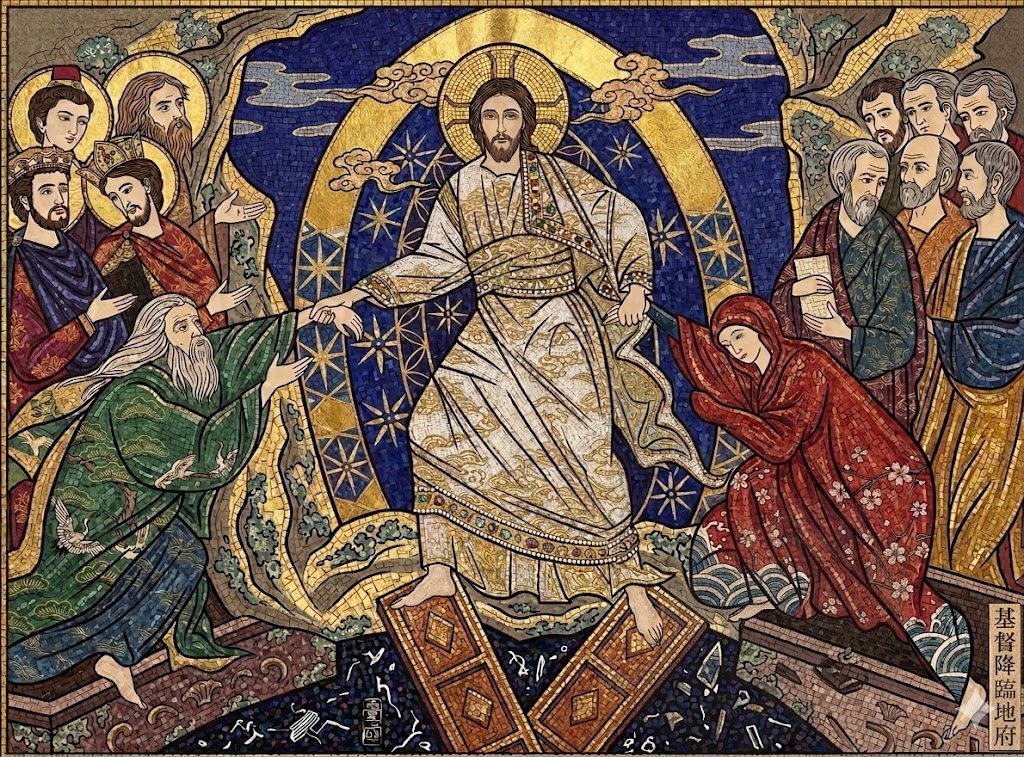
(9)祂雖受苦、受死,但在靈裏祂卻復活,意即祂復活後的身體,不同於以往,可以突破過去的限制,能上天也能下地,特別是下到陰間宣告祂的勝利。
(10)原來在猶太人的世界觀中,世界是分為「天上的、地上的、地底下的」。
(11)請參啟示錄五章13節「我又聽見在天上、地上、地底下、滄海裏和天地間一切所有被造之物,都說:『願頌讚、尊貴、榮耀、權勢,都歸給坐在寶座上的那位和羔羊,直到永永遠遠!』」
(12)又如以弗所書四章9-10節「既說『他升上』,豈不是指他曾降到地底下嗎?那降下的,就是高升遠超越諸天之上的,為要充滿萬有。」
(13)所以彼得提到的「下到陰間」的確是新約中最難解釋的經文,但是我們至少可以看到,基督曾下到陰間向那些被監管的靈傳道。
(14)特別是挪亞方舟時代,除了挪亞一家八口之外,其他受難者的靈魂,竟然也有機會聽到耶穌所傳的道。
(15)然而困難在於這是聖經中的「孤例」,很難形成堅固的教義。
(16)但是我們把握經文的重點是耶穌上天、下地、到地底下宣告了祂的勝利,使宇宙間都聽到勝利的聲音。我們又有何懼呢?
3.默想與回應(張勝為牧師撰寫):
(1)基督能夠「上天(上帝的右邊)/下地(下到陰間)」,突破時空與物理的諸多限制,這真的要有很大的神學想像力。關於基督下到陰間傳福音,可以搜尋「Harrowing of Hell」的圖片,兩千年來教會藝術在這方面有不少表達,若真的要寫成教義可能就過於牽強了……還是當成奧秘吧。
(2)另外,這段寓意解經真的很有意思,洪水原本是有破壞力的、是上帝拿來滅絕的工具;但彼得解釋對進入方舟而得救的挪亞一家八口(「船」的說文解字:舟/八/口)而言,洪水反而成了一種「洗禮」,當他們大難不死之後,可以過上新生活。
(3)這段經文以現代人的角度來閱讀確實相當跳躍式思考,摸不著頭緒。但其實從死亡到復活本身不就是超越我們所能想像的事情嗎?讓我們默想復活的基督,祂拉著我們的手,要把我們從災難、滅絕與死亡中拉拔出來。
(圖片製作:Gemini)
出了方舟 Came Out of the Ark
《韋恩每日靈修:創世記8章13-19節 洪水消退》(2026/05/09 禮拜六-白天)
1.金句反芻:
於是挪亞同他的兒子、妻子、媳婦都出來了。一切走獸、爬行動物和飛鳥,地上所有的動物,各從其類,也都出了方舟。
So Noah came out, together with his sons and his wife and his sons’ wives. All the animals and all the creatures that move along the ground and all the birds—everything that moves on land—came out of the ark, one kind after another.
(創世記 Genesis 8:18-19)
2.註釋(中華基督教衛理公會三讀三禱團隊整理,★早禱影音):
(1)四十晝夜的大雨終於停了,洪水也退了,地終於也乾了。
(2)在這場驚天的災難之後,這個因為上主的命令進入方舟的家庭,也隨著上主的命令走出了方舟。
(3)世界要重新開始,生命要重新「繁殖增多」。
(4)「新的開始」使得生命終於可以保全下來,但是卻付出了極大的生命代價。
(5)請問你如何看待這事件呢?
(6)經過這場巨變的家庭,走出方舟時會是一種怎樣的心情呢?
3.默想與回應(張勝為牧師撰寫):
(1)創世紀的人們都是如此高壽,挪亞下船時竟然已經601歲了……不知道活到此時他的心情如何?(關於族長們的高壽,可以參考https://yimawusi.net/2026/01/06/did-the-patriarchs-of-the-ot-really-live-a-long-time/,當然這也只是一種詮釋和推論。)
(2)上帝給了出方舟的動物們一個應許:「牠們要在地上滋生,繁殖增多。」換句話說,從救恩的大船「出來」之後,最基本的生命任務就是要好好生活。其實我們「進」教會領受福音的目的,不也是為了能「出來」好好生活嗎?
(3)巨變後的生活,我不容易想像……是否會有創傷後遺症(PTSD)?還是能無憂無慮地享受新生命/新環境?歲月不等人,如果肯放下包袱、輕裝簡行(老話一句:「竹杖芒鞋輕勝馬,誰怕?一蓑煙雨任平生。」)去探索新生活,或許會好過一些。
讀書筆記:唯讀聖青(7)- 莎樂美
📒讀書筆記:王礽福著,《微讀聖青-遇見聖經人物的徬徨少年時》,2025年6月,葡萄紙文化(張勝為撰寫,25之7:莎樂美-致命一舞,2026/05/07)
1.聖經經文
馬可福音6:16-29
馬太福音14:1-12
2.佳句摘錄:
(1)莎樂美的家庭很複雜,比起崩壞的現代家庭,有過之而無不及……安提帕為娶希羅底,觸犯兩條猶太律法:無故離婚、娶嫂子為妻,使得施洗約翰「多次」(太十四4;新譯本)批評他,可能已造成一定的社會輿論。希羅底恨不得殺了約翰,倒是安提帕敬重約翰為人,只捉了他坐監,明罰暗護。這就是莎樂美的家庭,是不是很複雜?
(2)這天安提帕生日,大排筵席,貴賓如雲。然後,莎樂美公主進來跳舞。公主跳舞,你想到什麼?你可能想到迪士尼,我則想到一句話:「成何體統!」不是我保守,畢竟現實不是迪士尼,正常來說公主不會載歌載舞,任人觀賞。古代世界,舞蹈表演是奴婢甚至妓女的行為,特別是希律家族的性道德又不怎樣高尚,這場表演不可能屬於國家戲劇院的藝術表演,而可能近乎電子花車那種充滿挑逗意味的演出。
……還是那個問題:一個母親怎可能讓身嬌肉貴的女兒,化身挑逗情慾的舞孃?但認真想想,有什麼不可能?希羅底只是做得比較赤裸罷了。很多「為孩子好」的父母,何嘗不是竭力把子女栽培成一部功名利祿的機器?沒錯,她是你心目中的小公主,不過你卻教她做出妓女的行為(希望不要扯到什麼歧視性工作者的說法),因為你覺得「值得」!有時聽見一些名校父母(以及校長)教導少年人的言行,我就詫異到底他們想培養一群怎樣的「名人」?當見盡社會權貴、高官的各類嘴臉後,或許你就明白為何「仗義每多屠狗輩」。當然我們無法完全區分這些「名人嘴臉」,有多少屬天生,有多少是受環境耳濡目染,有多少是父母教導出來的。
(3)莎樂美跳完舞,希律龍顏大悅,可能就跟她說:「妳無論想要什麼,只管向我求,我一定給妳!」但莎樂美不知道是不相信,還是不知道要什麼才好,一時之間不知道如何回答。希律見她不作答,於是「再三」承諾朕一言九鼎,一言既出、駟馬難追,只有妳想不出,沒有我做不到的事,「循循善誘」,愈吹愈大:「妳無論向我求什麼,就是我國的一半,我也一定給妳!」
莎樂美畢竟是個「女孩」,想不出該要份什麼大禮才好,她不想錯失「機會」,就跑去問媽媽,因為她相信媽媽一定給她最好的建議。一件原本喜氣洋洋、皇恩浩蕩、父愛如山的事,來到這位充滿仇恨的母親手上,就成為除去眼中釘的「機會」:「要施洗約翰的頭!」
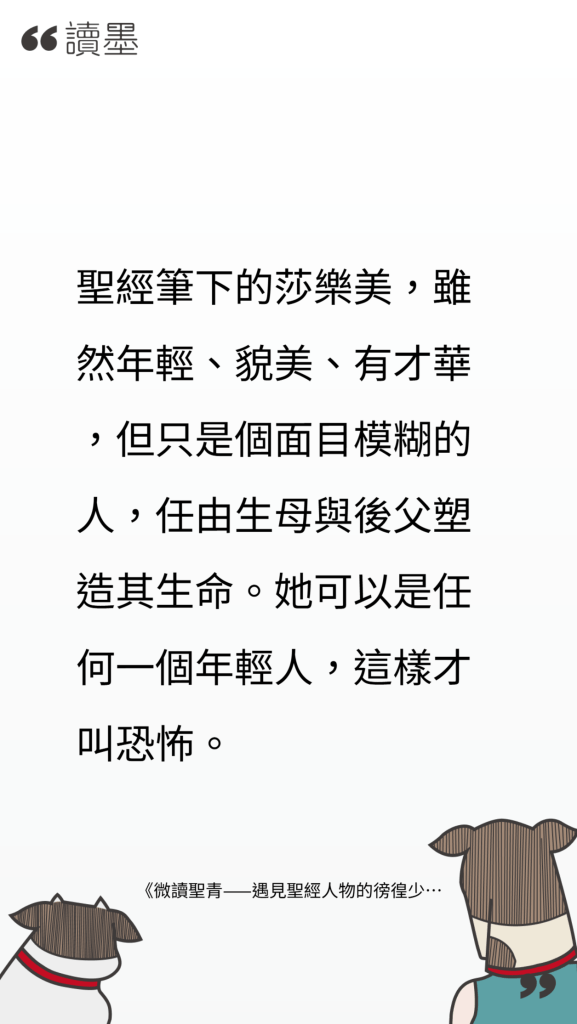
……當細閱聖經有關莎樂美的記載,對照現時那種相當功利的教育模式,我覺得現實才夠可怕。王爾德筆下的莎樂美,是個主體性極強的人,縱然她一步一步把自己迫向瘋狂,但你知道,那是名叫莎樂美的人的獨特故事。你能想像愛慾可以有多瘋癲,卻不會視之為愛慾的常態。但聖經筆下的莎樂美,雖然年輕、貌美、有才華,但只是個面目模糊的人,任由生母與後父塑造其生命。她可以是任何一個年輕人,這樣才叫恐怖。
(4)資源較豐富的父母,比較有能力塑造子女擁有各項才能,但他們一定知道自己在做什麼嗎?還是,他們正正知道自己在做什麼,所以才這樣做?資源比較多的人,也比較知道如何找門路、鑽空子,做出一些不道德但合法,甚至既不道德又不合法的行為,只是官官相衛、權權相護,一般人拿他們沒辦法,以致「快人一步,理想達到」。
這樣的「家學淵源」,自然成為這些父母希望子女「世襲」的傳統。少女莎樂美成功了,經歷此事後,她跟其父母成為同一夥的人,跟他們走相同的路,貴為王后,留下肖像,名載史冊,卻只是聖經裡一個無名無姓的幫兇,縱然她年輕、貌美、有才華。
3.心得:
(1)福哥這章真正想談的我認為是家庭教育,特別是如何傳遞正確的價值觀。
(2)先說一個額外話題,其實初代教會也有一些權貴(包括政要、地方門閥、商賈……等等)信主,例如百夫長哥尼流(徒10:1-2)、法利賽人尼哥底母(約3:1、19:39)、紫布商人呂底亞(徒16:14)、甚至還有總督彼拉多的妻子(太27:19,雖然正典沒有記載,但一些典外文獻與部分教會傳統顯示她成為基督徒)。這些權貴有的成為地方教會的重要同工,有的則是隱身在歷史中默默服事/服務;我認為現代教會要處理階級問題仍要小心,千萬別把馬克思那套「打倒賣國權貴」、「打倒土豪劣紳」的想法原封不動地搬進教會,因為教本應該平等照顧所有階級的人,無論出身與貧富(我指的是理想狀態)。當然現代教會裡偏袒有錢人,甚至被有權有勢的長老/執事/董事把持教會方向……等等現象也確實存在,這裡無法一一述說,或許有機會另外來談。
(3)回到本故事的主角莎樂美(新約聖經並沒有給她名字,但從歷史資料考察以及後世愛爾蘭文學家王爾德的改編劇作中可得知),她在十多歲就成了母親希羅底以情慾之舞包裝的政治工具,她似乎失去了自己,成為了「面目模糊的人」,實在讓人心裡一沉、陷入惆悵。本來親子溝通就是一門比高等微基分(不好意思,我只是借比喻一下其實自己完全不懂啊,我連初等微積分都是低分pass)還困難的學科,若加上金錢與家世的考量,我覺得確實難解……。我在牧會的短暫生涯中看過不少被父母溺愛與操控的子女、也看過一些與原生家庭幾乎決裂的子女,但我很慶幸至少還看過少數溫馨、健康、有界限也有支持的親子關係。
(4)在結尾,福哥也考察了莎樂美「成功」的一生,並下出結論:「(她)只是聖經裡一個無名無姓的幫兇」。這樣的批判是否太苛刻?其實我想到每個時代對「成功」的定義與處境稍有點不同、但總是不脫錢、權、名、色(在我們的時代又加上了「科技」,更具體來說是「電力與算力」),這些都是難以逃脫的試探,要反過來過聖潔而簡樸的生活根本難上加難。但很難並非代表不可能,至少今天故事中被砍了頭的施洗約翰,他用生命實實在在見證了他所宣揚「悔改」的信息(可1:4),或許是這篇悲劇中唯一微微閃爍的亮光。
(5)想到以前曾聽過一首由朱頭皮長老作詞作曲的《頭》,滿有意思:「……不要怕頭掉下來,我不怕你不怕我。真正害怕不是你,真正害怕的是那要取走你靈魂的魔鬼。莎樂美阿,搖阿搖,婀挪多姿,星空夜。高貴無比,愛或慾。軀體搖曳,吞噬朦朧。釋放邪惡,莎樂美阿。」(取自:https://streetvoice.com/pigheadskin/songs/655376/)
★完整集數
方舟 The Ark
《韋恩每日靈修:創世記6章5-22節 上帝對挪亞的命令 》(2026/05/07 禮拜四-白天)
1.金句反芻:
看哪,我要使洪水氾濫在地上,毀滅天下凡有生命氣息的血肉之軀,地上的一切都要滅亡。但我要與你立約;你同你的兒子、妻子和媳婦都要進入方舟。
I am going to bring floodwaters on the earth to destroy all life under the heavens, every creature that has the breath of life in it. Everything on earth will perish. But I will establish my covenant with you, and you will enter the ark—you and your sons and your wife and your sons’ wives with you.
(創世記 Genesis 6:17-18)
2.註釋(中華基督教衛理公會三讀三禱團隊整理):
(1)選擇在主的道路上的人也會有各樣的「考驗」,不見得是一帆風順。
(2)因為決定走在上主的道路上,不等同於走在「順利」的道路上。
(3)領洗的會友,走在一條新的人生道路上,需要祈求主給我們勇氣與毅力,面對上主要我們在生命道路中學習的功課。
(4)今天經文讓我們回憶起一件人類近乎滅絕的危機。
(5)經文一開始提到在受造的世界中,人類的社會「罪大惡極」。
(6)這是一種怎樣的情況呢?有人形容,若是一個社會裏,即便「想要成為好人,都不能夠做好人」的景況,一個社會若行公義就不能生存,若對人憐憫就會受害;若不同流合污,或隨從世俗的價值就無法存活,這樣的社會就是所謂的「罪大惡極」的情況,或是聖經其他地方所形容的「惡貫滿盈」的狀態。
(7)到了這個臨界點時,上主便會親自干預。
(8)在所多瑪、蛾摩拉的時代就是如此,今天讀到挪亞的時代也是如此,所以上主要干預,不然人類就會自行毀滅。
(9)「方舟」是上帝拯救的計畫,但這個計畫是很大的工程,需要花費很長的時間。
(10)這段時間其實也是恩典的時間,在洪水來臨以前一切都還有機會。
(11)請想想,我們是否也是處在「恩典的時間」之中呢?我們還能做些什麼呢?
★早禱影音
3.默想與回應(張勝為牧師撰寫):
(1)罪大惡極、充滿敗壞……其實在人類歷史中,有哪個時代不是這樣的?不過我還是慶幸能生活在2026年的台灣,因為民主/自由/法治還是有一定的約束力(舉個例子,現在酒駕的比例已經低很多了,因為零容忍政策會直接高額罰款與扣駕照/牌照,這也是許多人命換來的),也有一定的空間和自由度。
(2)然而,我們所處的現代社會,對於真/善/美還有執著與追求嗎?還是大環境逼迫我們屈服於假/惡/醜陋?這恐怕無法一概而論或亂貼標籤,但值得我們想一想。
(3)救恩的方舟(The Ark)需要花時間與心力打造預備(方舟其實也預表著基督的教會),並且挪亞身兼老公/父親/族長/動物園長/船長/伐木工/造船師……這可真不簡單。其實人只要活著,哪怕只是單身,也是身兼多重角色且一生「勞苦愁煩,轉眼成空」不是嗎?但要是我們的所作所為與「恩典的時間表」對齊,那也不算是太苦、太空、太浪費生命了。
生命樹 Tree of Life
《韋恩每日靈修:箴言3章13-18節 上帝是真理、生命(2) 》(2026/05/06 禮拜三-白天)
1.金句反芻:
她的道是安樂,她的路全是平安。她給持守她的人作生命樹,謹守她的必定蒙福。
She will guide you down delightful paths; all her ways are satisfying. Wisdom is a tree of life to those who embrace her; happy are those who hold her tightly.
(箴言 Proverbs 3:17-18)
2.註釋(中華基督教衛理公會三讀三禱團隊整理):
(1)這是一首「智慧的頌歌」。
(2)延續主日「道路」的主題,上主透過智慧的指引,讓我們知道人生當行的道路,能擁有智慧比一切都重要。
(3)一切所想像的美好如長壽、富貴、安樂、平安等,都不能比擬智慧。
(4)更重要的是,上主原本要給人最好的禮物──生命樹,她(智慧)要給持守上主智慧或堅持上主道路的人。
(5)此刻你行走在怎樣的道路中呢?你的道路是通往怎樣的目的地呢?
★5/6早禱影音
3.默想與回應(張勝為牧師撰寫):
(1)金子、銀子、寶石/珍珠……等等看起來都很吸引人,都是「價格」不斐的物品。而長壽、富貴、安樂、平安比上述的更有「價值」,因為這些連大把金錢都不一定買的到。
(2)在價格與價值的選擇之間,上主提供了我們一個更珍貴的東西-智慧。智慧如同上帝的園子當中的生命樹(創2:9、啟22:2),這棵樹見證了人類歷史的起點與終點,它所結的果子帶來生命、葉子帶來醫治。
(3)如何得到智慧?上文的3:7已經跟我們說:「不要自以為有智慧;要敬畏耶和華,遠離惡事。」要依靠上帝、知道自己的限制、也要天天練習不被邪惡引誘(如果跌倒了,就再爬起來吧!如果真的嚴重犯罪,也勇敢負起應負的責任吧!)。
讀書筆記:王崇堯院長,《神學導論》(3)-理性與啟示
📒讀書筆記:王崇堯院長,《神學導論》(張勝為撰寫,15之3:理性與啟示,2026/05/05)
1. 摘錄:
(1)對理性無知的誤解,以為理性必然與信仰為敵,是現代高舉理性為一切依據的通病。其實,現代人運用於生活的理性算計,只是一種技術功能,神學家田立克(Paul Tillich)認為此理性功能只是技術性概念,可說是一種技術層面的推理能力而已。然而,當探究理性的本質與根源時,此理性遠超於技術性功能,指涉牽動人類思維的一種基本認知能力,甚至早期的希臘哲學,更將此理性法則視為宇宙萬有安定秩序的力量,並稱此宇宙法則為「洛克思」(logos),它是技術理性的本源,可說是理性的真正本質。
因此,理性可區分為二種概念:一是本體性理性,是理性的法則。是西方哲學所推崇宇宙秩序法則洛克思;另一是技術性理性,是一種推理能力。……我們常說,信上帝的人,信到最後自己成為上帝。本來是要與上帝同「行」(ㄒㄧㄥˊ),最後卻變成與上帝同「行」(ㄏㄤˊ),想跟無限的上帝一樣。
(2)如果理性本質(Logos) 根源於上帝,為何理性與信仰會相互為敵?原因就在於本來作為理性本質根源的上帝,人們誤信為一種「宗教他律」,且形成令人難以接受的權威、教條,甚至玄思迷信,來迫人接受;這引來人類與生俱來的理性心智反抗,而抗拒的結果,便導致人們寧可選擇相信自己理性心智的判斷,也不願就範於宗教教條及玄思權威。
……理性與信仰的衝突在於人的有限性。人的有限性使他/她所尋求的終極信仰形式化為「他律」的宗教,而引起理性「自律」的反抗。其實「他律」(heteronomy)與「自律」(autonomy)皆根源於「神律」(theonomy) ,不然就各自迷失。信仰迷失於「他律」,理性自傲於「自律」。結果,原本根源於上帝本身的內在法則變成外求他律,原本根源於上帝的理性外離於「自律」,原本人的本性協調可在無窮盡的根基及愛的力量來實現自律,現今卻自以為是。
田立克認為信仰應是一種「終極關懷」(ultimate concern) ,而理性心智就是對此「終極關懷」之尋根追尋。對上帝信仰的終極關懷若與人的生存(to be or not to be)意義有關,那麼探討人類所有活動形式的根底面向就皆有宗教意涵。 當現代人迷惑於人生的哲理思考,被好奇心驅使去追根究底探問真理時,他/她們最終詢問的還是「什麽是真?」真理的終極意義為何?在此,「真」的終極成了所有探求哲理形式的根底。當現代人探求事物判斷的是非,被正義感驅使去追根究底公義時,他/她們最終詢問的還是「什麽是善?」公義的終極意義為何?在此,「善」的終極成了所有事物是非判斷的根底。當現代人陶醉於感官世界的外在,被沈迷心驅使去追根究底美感時,他/她們最終詢問的還是「什麽是美?」美感的終極意義為何?在此,「美」的終極成了感官世界景象的根底。
(3)今日教會的問題,雖說相信聖經是上帝啟示的話語,但卻一直重複同樣的話語意義。話語靜止了,就一成不變,就無法再度律動上帝的話語,這就是啟示的動態性。當然,啟示是一個動態,但接受啟示的人,以及傳承這些啟示的教會或基督徒,還是會變形、或是靜止!靜止了上帝的話語,上帝的話語就會失落真正的感動;變形了上帝的話語,上帝的話語就會由不同的語言所取代。
譬如說,初代教會的信徒,他們曾與耶穌一同生活過,聆聽他所說的話語。但接下來的第二代或第三代信徒,他/她們所信的啟示是上一代傳承給他/她們的,他/她們是信使徒傳統所信的耶穌,而且是靜止於大公教會的傳承。啟示的話語被停住了,它就發展成僵化的教義;而僵化的教義就使原本啟示的話語變形,成了排外的冷言冷語。承繼啟示的教會、或基督徒團體,我們一定要深思我們的信仰能否再度聆聽上帝的話語,經由內在心靈的祈求,讓生命的終極關懷重現,而非情感的潛意識重現,或僵化的教義重現。
這樣我們就可以進一步再理解,啟示的知識與一般的知識有何不同。在人類存有的理性結構中,啟示知識的功能是顯示奧秘。是一種「非比尋常」的狀態,所以啟示狀態的知識,不是再於增加我們對於自然、歷史、人類存在結構的知識;而是讓我們與永恆建立關係、來擴展生命的廣度與深度。 然而,今天的基督徒常常將啟示的知識與一般的知識搞混,結果啟示的知識與歷史的認知矛盾,與自然的科學論證作對。結局是,啟示的知識與自然的知識在比賽誰對,如同創造論要把進化論打入地獄,而進化論要把創造論趕出學術的園地。
(4)啓示(Revelation) 字面涵義是「揭開覆蓋」(removing the veil) ,把事物背後隱藏的意涵揭露。現象學有一盲黠,那就是透過對現象事物的經驗來描述事物,但對事物本身所隱含的真正本質卻疏忽不論。其實在物理現象背後的形而上(meta-physic) 是有意義的。啓示就是將隱藏在事物的奧秘的某種真諦顯露出來,以理性本身來說,就是將理性之根源或存有之根源的隱藏奧秘揭露出來。
……當上帝的啟示臨到我們時,那是「非比尋常」的。「非比尋常」是在一種超理性的狀態,但並沒有破壞理性的心智結構。當上帝在西乃山上頒布律法給摩西及以色列民時,那是非比尋常的狀態;因為它沒有破壞理性心智結構,以色列民後來就能以推理能力將上帝頒布的律法化為猶太律法,而後衍生「守律法」就可得到上帝的啟示與拯救。
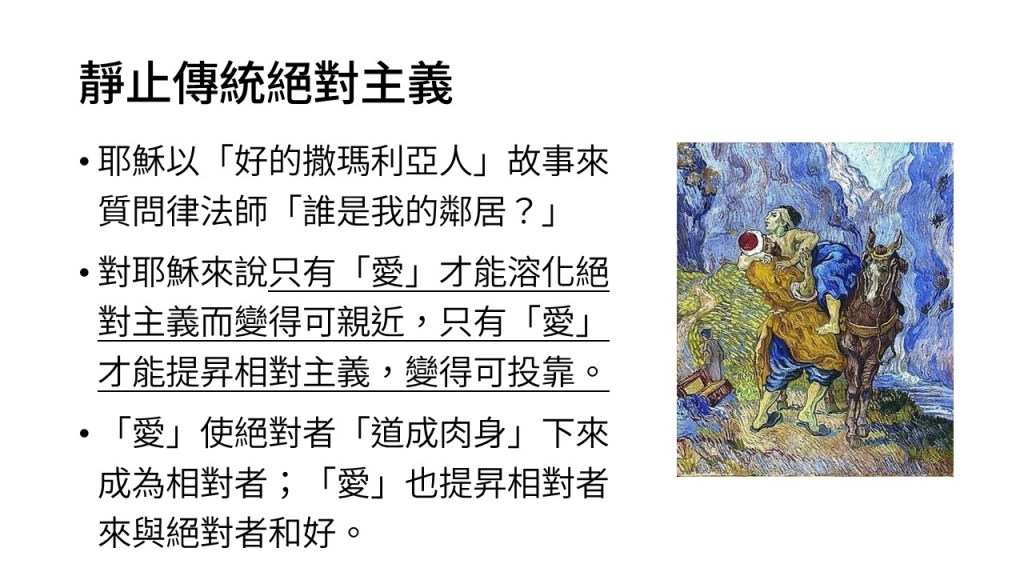
……奧古斯丁在懺悔錄中也以偷梨子的經驗來述說相同經驗:梨子其實是難吃的,但為什麼要偷採它呢?奧古斯丁說這是反抗律法的快感!確實如此,越強迫的命令,人越容易反抗。也許今日學生不來上課的理由,是有反抗老師的快感吧! 馬丁路德曾說若以行為衡量能否上天堂,他是第一名,但他也自省說:「律法若不是在快樂中成全,就是沒有成全。」 有人守律法,但不快樂,是不快樂的聖人;有人常犯錯,卻快快樂樂,是快樂的罪人。難怪有人會說,寧可做快樂的罪人,也不要做不快樂的聖人。人能不能依本性而活,不在於律法,在於與本性根源連結而衍生的動力,而「愛」就是啟示的動力,這樣才能成全律法。
(5)律法主義作為啟示的經驗,要與愛連結,才能真正達成知行合一。禁慾主義作為啟示的經驗,要與愛連結,才能引導本性正確的發展。靈恩主義作為啟示的經驗,要與愛連結,生命才有正確的作用,不是追求非凡超聖,而是在平凡中顯示非凡,如一句話所說,不必做偉大的人,好好做人就很偉大。聖禮作為啟示的經驗,要與愛連結,才不會以小看大,而是聯合在大的裡面,讓小得以放大。教義作為啟示的經驗,要與愛連結,這樣因信稱義的實踐,才不會把焦點放在自己的信來誇口自己,奪取啟示者的主權。敬虔主義作為啟示的經驗,要與愛連結,這樣感情上的奮興才不會連結在自己的興奮而小題大作,而是連結在生命的根源,敬虔有了理智的定向。
2. 心得:
(1)本章的重點是從近代的「理性」連結到基督信仰的「啟示」。說到理性,讓我想起與一位我十分尊敬的牧長的私人對談(此人已安息,在此揭露應無妨):「依我看,現在越白癡、越反智的教會常常越興旺。」當時聊天的前後文是談到當代教會的許多「泛靈恩亂象」(請別誤會我反靈恩,若說到靈恩經驗我是從中受惠很多),此長輩輕輕帶過、卻也十分銳利的批判讓當時的我冷汗直流,久久難以忘懷。而王院長本文強調了理性/理智的重要,同時也提出理性/理智的限制(想要與上帝同「行」(ㄏㄤˊ)),需要啟示的補足。
(2本文引用了田立克的「終極關懷」(王院長絕對是「田粉」),並指出了人類的三大動力源:好奇心、正義感與沉迷心。在當代許多基督宗教組織萎縮之下(這是全球現象,並非特定地區與宗派而已,也跟有些人拿來說嘴的保守/自由路線無直接相關),我認為光是第一點:追求「真實」的「好奇心」,就值得大書特書了。我觀察到很多人不願意再接觸基督教會,並不是教會給不出答案(「神愛世人」已經宣傳了兩千多年,難道有人不知道?),而是教會不再問問題,不再努力探詢「真」了,而這個「真」往往是對人類當前實況的深沉觀察。
您可能會說,有些教派還是繼續興旺阿?我觀察到繼續興旺的不少是那些夠大、資源夠多如同企業一般的教會,他們能夠提供如同美式賣場一樣份量足又充實的節目與空間,「生意」當然不錯(然後你可別怪信徒如同消費者一般勢力眼又薄情、隨時會逐水草而居,因為他們真的就是來消費的,當然常常比價、歸屬感也不強)。與之抗衡,我想或許我自己的使命就是如同聖經中的歷代先知們繼續問問題,繼續嘗試追求「真」(天啊,我自以為是誰……?雖然我是個罪人,但我至少還自以為是上帝的僕人……),而拒絕那些攏統、僵化、死氣沉沉又廉價的宗教答案。
(3)馬丁路德說「律法若不是在快樂中成全,就是沒有成全。」這是信仰與宗教的張力,因為宗教由上帝的啟示而來並傳達信仰的內涵,但宗教本身也可能會失去活力(「快樂」),需要增添「愛」。如果說神律/自律/他律三者的交互辯證如同燃油引擎的曲軸/活塞/汽缸相互配合爆炸運轉的話,「愛」或許就像那瓶配方良好的「機油」(一定要定期更換),起到潤滑、清潔的重要效果。
(4)本文的結尾用「與愛連結」歸納了律法、禁慾、靈恩、聖禮、教義、敬虔六種主義實在精闢。尤其對於靈恩主義與敬虔主義的提醒,指出「偉大的人v.s.好好做人」以及「自己的興奮v.s.連結生命的根源」兩個關鍵,雖然字句平凡、也不特別嚴厲,卻指出了當代教會的痛點,或許也可以成為一帖清涼藥方。
(圖片取自課程PPT)
 Seng-Ui's Blog